Google’s proposed Android changes won’t save sideloading
Mishaal Rahman / Android Authority
Yesterday, Google and Epic lastly reached an settlement to settle their years-long authorized dispute. If authorised by the decide overseeing the case, the settlement would resolve the lawsuit Epic filed in 2020 to problem Google’s stranglehold on Android app distribution. As a part of the settlement, Google plans to make sweeping modifications to Android, which will likely be applied in a future model of subsequent 12 months’s Android 17 launch. The corporate is growing a brand new system that can enable customers to simply set up third-party app shops, decreasing the friction of getting apps from exterior of Google Play.
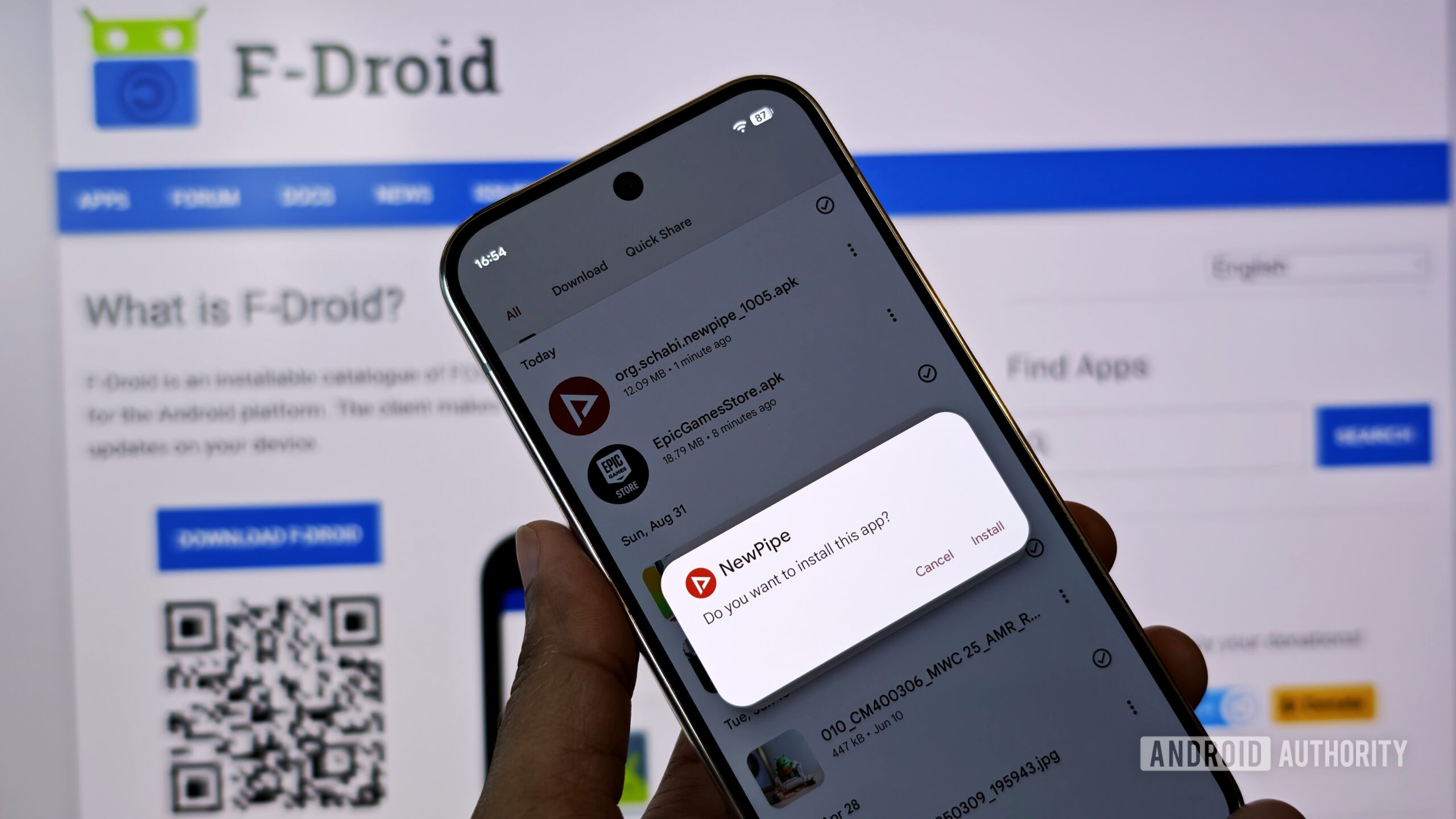
This timing is notable, as subsequent 12 months can also be when Android’s new developer verification necessities will go into impact. Starting in September 2026, Android will block customers from putting in apps made by unverified builders. Though Google says that sideloading isn’t going anyplace, some critics are involved this variation will kill various app shops like F-Droid. That’s why Google’s settlement with Epic has sparked hope that Android’s sideloading restrictions will likely be eased or eradicated completely subsequent 12 months.
In the event you had been hoping for that, then I’m sorry to disappoint you, as a result of Google’s proposed modifications to Android gained’t save sideloading as we all know it. They may, nonetheless, make the Android app ecosystem extra aggressive, benefitting customers by decreasing costs and enhancing app availability. Right here’s how.
Putting third-party app shops on equal footing with the Google Play Retailer
The largest change coming to the Android OS is assist for “Registered App Shops.” A “Registered App Retailer” is a third-party app retailer that Google has licensed. The certification course of hasn’t been outlined but, however the settlement phrases state that Google could create “cheap necessities” for certification, comparable to a evaluation of the app retailer and the fee of a “cheap” charge that covers operational prices. This charge is probably not “income proportionate,” that means it can’t be based mostly on how a lot income the app retailer generates.
As soon as an app retailer is licensed, customers can set up it with a single click on from its web site. It will provoke a “single retailer set up display” that makes use of “impartial language” somewhat than the present warnings that Epic argues deter customers from continuing.

Mishaal Rahman / Android Authority
A photograph exhibiting one of many many present dialogs that customers need to click on by to put in the Epic Video games Retailer on Android.
Importantly, this set up display can even “grant the permission to the shop to put in apps.” It’s unclear whether or not this refers back to the INSTALL_PACKAGES permission, which permits shops to put in apps with out person intervention, or REQUEST_INSTALL_PACKAGES, which requires the person’s consent for every set up. At present, solely preinstalled app shops just like the Google Play Retailer can have the extra highly effective INSTALL_PACKAGES permission. Third-party app shops need to request the latter, which provides additional steps for the person.
For years, Epic has argued that Android makes it onerous and scary to put in and use third-party app shops. In comparison with the seamless expertise throughout the Google Play Retailer, putting in an app from another supply entails much more friction. Customers should navigate a multi-step course of stuffed with prompts that use discouraging language. Google has lengthy argued this circulation is important to guard customers, and whereas there’s definitely fact to that, it additionally weakens any third-party try at dethroning the Play Retailer.
A screenshot gallery exhibiting a number of the key steps that must be taken presently to put in the Epic Video games Retailer after which set up a recreation from the shop.
By reducing down this multi-step course of, third-party app shops may see larger adoption. If extra customers flock to those various shops, then extra builders will comply with, and vice versa. Ultimately, some third-party Android app shops could even develop into aggressive with Google Play.
Whereas Google definitely doesn’t wish to put third-party app shops on a extra degree enjoying subject with its personal, it doesn’t have a lot alternative. Epic gained its lawsuit in opposition to Google and was initially in search of to power the corporate to permit third-party shops on the Play Retailer and to open up its app catalog. Now, each events have settled on a unique method that will likely be applied worldwide.
To assist these “Registered App Shops,” Google should make core modifications to the working system. These modifications will likely be launched “in a model of the following main Android launch” — in different phrases, Android 17. Since this may doubtless require modifications to the Android SDK, we in all probability gained’t see the characteristic roll out till Android 17 QPR2 in December 2026, assuming Google sticks to its present launch schedule. Google is committing to supporting this characteristic by June 30, 2032, giving third-party app shops roughly six years to construct themselves up and tackle the Play Retailer.

Mishaal Rahman / Android Authority
Merely making it simpler to put in and use third-party app shops isn’t sufficient to place them on a degree enjoying subject with the Play Retailer, although. That’s why Google is committing to a number of different modifications that restrict its capacity to discourage OEMs or builders from working with third-party app shops.
For starters, Google can not forestall OEMs or carriers from preinstalling third-party app shops or inserting them on the house display. Beforehand, OEMs and carriers would signal agreements that restricted these actions in alternate for funds, revenue-sharing offers, or particular entry to Google services. Google is now agreeing to chorus from making such offers for 3 years from the date the settlement goes into impact.
As well as, Google is agreeing to cease sharing Play Retailer income with any entity that distributes Android apps or that has said its intention to launch a competing platform. This ensures Google can not repay present or potential rivals to maintain them from competing with the Play Retailer. For instance, Google allegedly thought-about sharing income with Samsung to discourage it from build up the Galaxy Retailer, an motion this settlement now explicitly prohibits for at the very least three years.
Lastly, Google agrees that it’ll “allow third-party app shops to function on Android freed from cost” by June 30, 2032. Which means direct downloads from developer web sites and third-party shops will proceed with none charges. The one exception is that if a obtain originates from a hyperlink inside an app (excluding internet browsers) that was put in or up to date from the Google Play Retailer. Principally, Google is agreeing to not impose further monetary burdens on third-party app shops or on apps downloaded from them. Be aware that this doubtless doesn’t prohibit Android’s developer verification necessities, as these don’t straight impose charges on app downloads themselves.

AssembleDebug / Android Authority
Whereas these modifications will put third-party Android app shops on a extra degree enjoying subject with the Google Play Retailer, they don’t resolve all of Epic’s complaints. Epic additionally efficiently argued that Google’s Play Retailer insurance policies had been far too restrictive and anticompetitive, so Google can also be proposing a number of modifications to its guidelines for various billing and developer-user communication.
Builders now have extra freedom to decide on which app retailer they wish to launch on
As a substitute of forcing all apps on the Google Play Retailer to make use of Google Play Billing for in-app digital transactions, Google will quickly enable builders to make use of various fee choices. These can embrace exterior internet hyperlinks or various in-app fee techniques. If a developer chooses to indicate another choice, it have to be displayed side-by-side with Google Play Billing, although they’re free to spotlight totally different pricing or different advantages.

The fee display that bought Fortnite kicked off the Play Retailer again in 2020.
It is a main change, as Google beforehand required most builders to completely use its Play Billing system for a lot of in-app purchases. Google costs a service charge of 15% on the primary $1 million of a developer’s income and 30% on all earnings after that. This ends in a major chunk of many firms’ income going to Google, a charge many have argued is extreme. By permitting builders to supply various choices, they will probably hold extra of their income and cross financial savings on to customers with decrease costs.
Nonetheless, Google can nonetheless take a service charge on transactions accomplished with various fee strategies. For in-app and linked purchases in video games, Google can cost a charge of as much as 20% for purchases that “impression recreation outcomes, gameplay progress fee, or participant energy,” in addition to for purchases with “random outcomes” (i.e., loot containers).
Google may cost an as much as 20% charge for any transaction that happens on exterior web sites after a person clicks a hyperlink in an app. To trace these transactions, Google will present an API to obtain fee and accounting info. The corporate agrees to not use this API for some other objective and might solely declare a service charge for transactions accomplished inside 24 hours of the person clicking an in-app hyperlink.
For different classes, Google can cost a service charge of as much as 9%. This consists of:
- Purchases of “content material, ranges, occasions, or beauty objects.”
- In-app subscriptions for apps.
- In-app and linked purchases in non-game apps.
This 9% charge additionally applies to the upfront value of paid apps on the Play Retailer.

Nick Fernandez / Android Authority
Whereas the precise charges haven’t been finalized, Google says this new service charge construction will begin no later than March 31, 2026, and can final by June 30, 2032. Curiously, there is likely to be a quick interval the place these charges don’t apply, as builders can start exhibiting various fee strategies as early as December 3, 2025.
To make sure builders can freely use this characteristic, Google can also be making a number of different commitments. The corporate won’t:
- Prohibit builders from speaking with customers about various fee strategies.
- Power builders to set costs based mostly on which billing system is used.
- Discriminate in opposition to them for utilizing another fee technique.
- Impose unreasonable restrictions on the design, placement, or messaging of other fee choices, aside from the requirement that they seem side-by-side with the Google Play Billing button.
Lastly, for a interval of three years, the settlement prevents Google from paying builders to favor the Play Retailer over competing app shops in the USA. Particularly, Google can not provide funds or different incentives to a developer for launching an app first or completely on the Google Play Retailer if it delays the app’s launch on a competing retailer within the U.S. Google can also be forbidden from paying builders to forestall them from releasing totally different variations of their apps with unique options on third-party shops within the U.S.
Nonetheless, Google can nonetheless provide incentives for builders to launch on the Android platform first or completely. When making these “Android-first” offers, Google should enable the developer to freely select which Android app retailer they use for distribution inside the USA. This prevents Google from creating an “Android-first” deal that’s secretly a “Play Retailer-first” deal for the U.S. market.
Total, Google’s proposed modifications will go a great distance towards making third-party Android app shops extra aggressive. The modifications particularly profit Epic, which has lengthy sought to determine its Video games Retailer as a serious platform for Android video games. The friction in putting in the Epic Video games Retailer will likely be considerably diminished, and Epic will likely be free to strike agreements with OEMs to preload its retailer. The corporate can even have extra leeway to make unique offers with builders, a follow it has used efficiently on PC.
For builders not trying to create their very own shops, the instant advantages are extra modest. Whereas they will quickly provide various fee choices, Google will nonetheless gather a service charge, limiting the potential financial savings. The actual long-term benefit is the potential for a extra aggressive market. If these modifications enable third-party shops to realize important traction, builders may have extra platforms to select from, which may result in extra favorable phrases for everybody.
In the end, this can be a foundational shift for the Android ecosystem. Whereas it gained’t save sideloading as we all know it, it guarantees extra alternative for customers. In the long term, this elevated competitors may result in a greater diversity of apps, unique content material on totally different shops, and probably decrease costs for in-app purchases. It’s not an in a single day revolution, however a serious step towards a extra open app market.
Thanks for being a part of our neighborhood. Learn our Remark Coverage earlier than posting.