If my phone can’t also be a computer, I don’t want to keep paying for extra performance
When was the final time you felt like your smartphone actually could not deal with it? I am utilizing final 12 months’s Pixel 8 Professional – just about a benchmark – as my day by day driver, and it is as clean because the extra highly effective ASUS ROG Cellphone 9 Professional I’ve used on the facet. However even earlier than that, I wrestle to recollect the final time an app took off and got here to life. Outdoors of some area of interest use instances, smartphone energy has been plentiful for just a few years now, however to take it to the subsequent degree, trendy manufacturing is making it increasingly more costly, however with little real-world profit. . We could already be previous the purpose of diminishing returns, however we’re additionally paying increasingly more for the privilege.
This 12 months’s Qualcomm Snapdragon 8 Elite is a primary instance; it provides vital steps up in commonplace efficiency, however is claimed to be considerably dearer than its predecessor. Likewise, MediaTek’s Dimensity 9400 additionally carries a better price ticket, nevertheless you may wrestle to inform a telephone packing these chips from final 12 months’s mannequin when it is in your hand. The cash thrown at greater benchmark scores could possibly be spent on higher cameras, newer battery know-how, or the rest in your want record. Returning to ROG, the bottom mannequin has ditched the telephoto digicam, little doubt to maintain up with the spiraling prices of high-end efficiency.
Rita El Khoury / Android Authority
With experiences that the next-gen Snapdragon 8 Elite 2 can be “considerably” dearer once more, one thing’s obtained to provide; be it greater costs or sacrificing different key specs. However is {that a} trade-off any of us are actually keen to make?
Are you keen to pay extra for quicker efficiency?
6119 votes
I am all for the additional efficiency, after all, however there needs to be a possibility to make use of it. In any case, it would not make sense to splurge on a sports activities automotive to cruise across the interior metropolis. For smartphones, you do not want the most recent and biggest chip to navigate by your on a regular basis apps and even hit 60fps in demanding Android video games. An additional 20% or better improve in peak smartphone efficiency appears educational at this level; it simply will not make any distinction in nearly any use case you’ll be able to title. After all, there’s extra to the high-end chips, however you’d wrestle to argue that mainstream flagships are hanging their gross sales on the likes of Wi-Fi 7 or the hardly completed 5G tech releases.
An additional 20% improve in peak efficiency appears educational at this level.
What these high-end smartphones want going ahead is a compelling use case to reap the benefits of all this additional efficiency headroom. And no, I do not assume HE is the reply right here. Customers are lukewarm in the direction of it up to now and immediately’s options work fairly properly on trendy and even barely older gadgets already.
Handheld gaming looks like an underutilized choice – immediately’s flagships far surpass the beloved Nintendo Swap. However until you are keen to work with Winlator or comparable, you are not enjoying trendy AAA titles in your telephone, whereas most traditional emulators will work on a potato. Barring a significant shift in Android/Linux and Arm gaming bases, future cell GPUs are destined to stay underutilized.
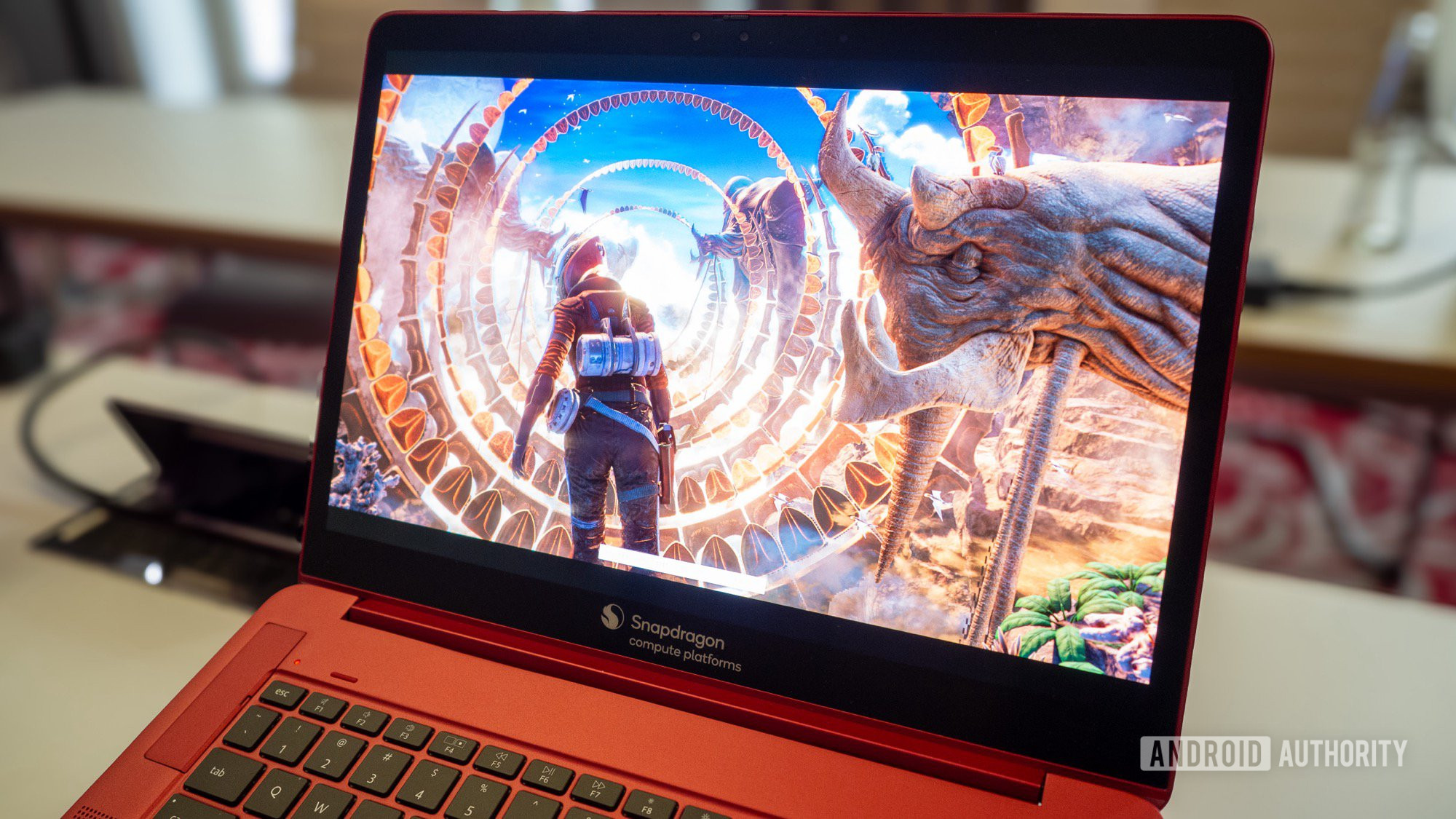
That leaves the oft-promised, however by no means actually realized pocket PC. I might definitely see myself utilizing my cell for work if I might run a correct Linux desktop from my telephone. Blasting my paperwork and messaging apps on the massive display is already potential to an extent, however letting my telephone’s processor rip at full tilt for picture modifying or managing my intensive media library, it is a lot much less of a computer-like expertise. With limitations like 5 simultaneous apps and few software program choices, the Samsung Dex – the clear market chief right here – by no means lived as much as this potential. I am desperate to see if Samsung can deliver Dex up with the extra highly effective Galaxy S25 sequence, however we have not heard something about it within the new One UI 7 beta, and Linux on Dex is lengthy buried.

Robert Triggs / Android Authority
Maybe there’s hope that the merging of Android and ChromeOS or the potential of working Debian apps in your telephone as soon as Android 16 opens the door to a wider vary of software program and use instances that may outlast tomorrow’s high-end chips. After all, the Snapdragon 8 Elite is greater than highly effective sufficient to function a high-end pill or perhaps a mid-range work laptop computer, the place picture modifying or code compilation can actually use these nifty CPU cores. of. Oddly sufficient, nevertheless, we have not seen mainstream cell silicon make its option to Chromebooks, which stays a largely AMD and Intel affair. And this factors to a different impediment: Linux software program assist for Arm processors is satisfactory, however even correct desktop assist doesn’t imply that we are able to lastly run our Steam library on smartphones. However it might be an vital step towards getting that all-important developer’s consideration.
Extra efficiency comes at more and more greater prices.
Nevertheless, huge efficiency actually wants an enormous display to utilize it, so much more smartphones will even must embrace DisplayPort over USB-C to make pocket computing an actual factor. So there are loads of shifting elements, which makes it appear unlikely that we’ll get essentially the most out of those highly effective chips anytime quickly. With that in thoughts, it would not make sense to purchase a telephone for constant efficiency.
As an alternative, maybe Qualcomm’s rumored Snapdragon 8s Elite and different high-mid vary chips can be greater than sufficient for on a regular basis smartphone efficiency and higher go well with our readers’ preferences for longevity longer battery life and extra inexpensive smartphones. Higher battery life and worth for cash are persistently thought-about your two most fascinating options in a contemporary smartphone, and the thought of options over energy definitely appears to work fairly properly for Google’s Pixel. Whether or not different main OEMs will see issues the identical method might be a lot much less doubtless, however the normal supervisor of Redmi/Xiaomi was polling followers earlier this 12 months in the event that they needed to proceed to observe the prices” upstream” or make telephones extra inexpensive. So customers usually are not the one ones who take into consideration the associated fee/profit ratio of recent gadgets.
The merging of ChromeOS and working Debian apps on Android hints at future energy use instances, however we’ll need to see.
The times of a brand new telephone feeling noticeably extra nimble than your earlier mannequin are lengthy gone anyway, but I discover it odd to show my nostril up at over-the-top efficiency we might barely think about a decade in the past. However it’s the trade-offs, significantly by way of squeezing product prices, which might be presenting the business with a troublesome alternative. If there are compromises to be made, I would slightly get the costliest cameras, essentially the most superior batteries, a no-compromise method to construct high quality, or only a value freeze on additional efficiency I can not fathom.
Till a compelling new use case comes alongside that makes my present telephone a wreck, I am more and more satisfied that producers ought to take their foot off the throttle a bit and accept extra modest annual advantages. They could even begin to actually give attention to different extraordinarily vital and standard elements of an awesome smartphone, like higher battery life.
(tagsForTranslation)MediaTek(s)Qualcomm Snapdragon