I’m glad Pixels don’t use Snapdragon. Here’s why!
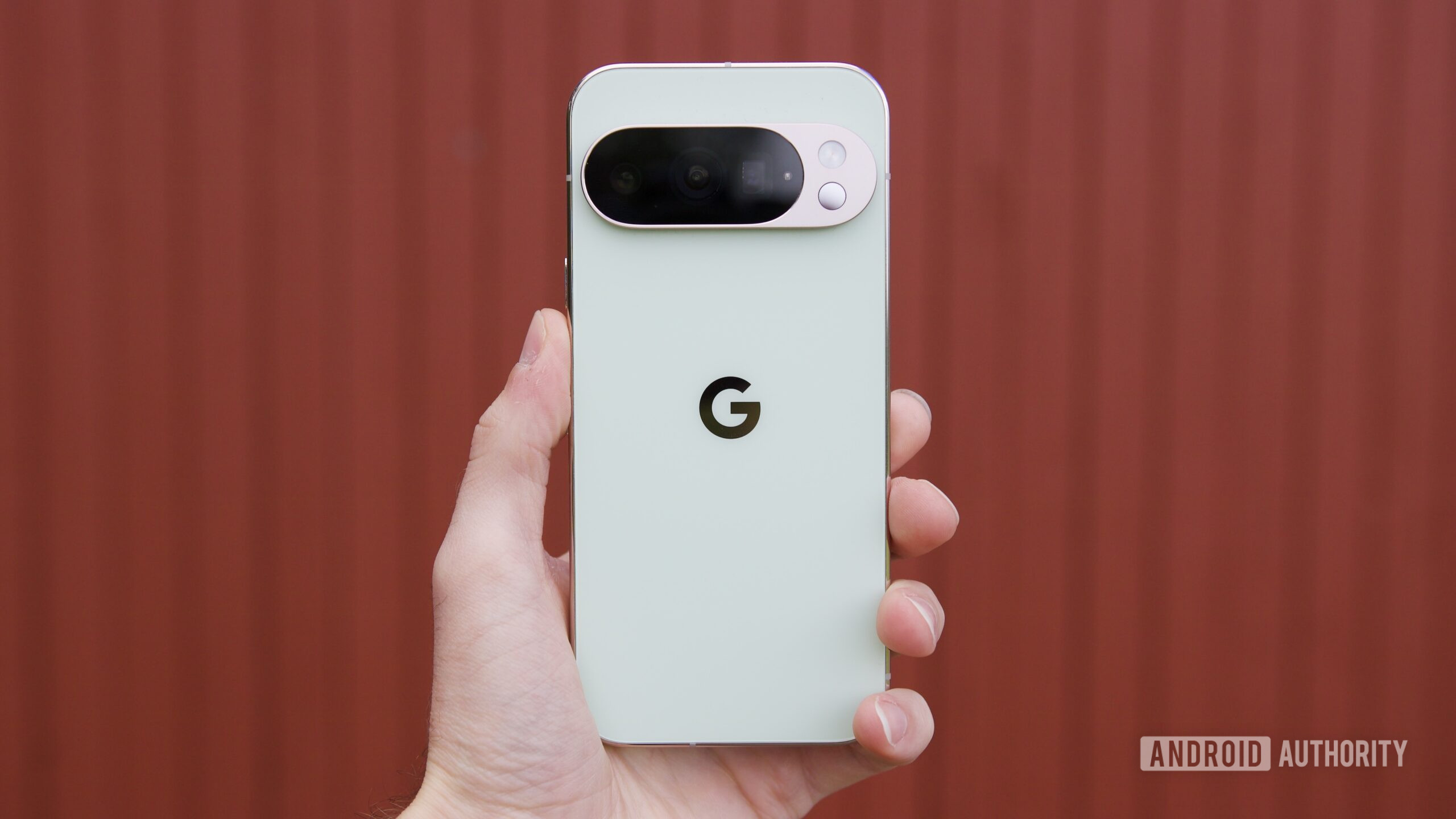
Of all of the hills I’m prepared to die on, this could be the one which will get probably the most pushback. It’s a controversial opinion, I do know, however I’m going to say it anyway: I’m glad Google Pixel telephones don’t use Snapdragon processors.
Let me begin my protection with a bit analogy. Think about that you just’re out there for a brand new automobile. Your objective is to take your loved ones on lengthy highway journeys, exploring nationwide parks and tenting below the celebrities. You want area for folks, beds, and perhaps even a small kitchenette. A tricked-out Sprinter camper van looks as if the proper answer, which might price you about $150,000. Sadly, your pal, a die-hard automobile fanatic, scoffs at your selection. “A Sprinter van? Why would you purchase that gradual factor?” they ask. “For a similar amount of cash, you can get a Porsche 911! It could actually go from zero to 60 in 3.2 seconds, bro!”
You’d most likely have a look at your pal, bewildered. A Porsche is an outstanding automobile, clearly, but it surely’s in no way the appropriate selection for the duty you take into account. You may’t take your loved ones tenting in a two-seater sports activities automobile, regardless of how briskly it’s.
If the Snapdragon 8 Elite Gen 5 is a Porsche, then Tensor G5 is a camper van. However is one actually ‘higher’ than the opposite?
That is the dialog I discover myself in each time a brand new Pixel cellphone is launched, with the Sprinter van being Tensor and the Porsche being a top-end Snapdragon. With the launch this week of the powerhouse Snapdragon 8 Elite Gen 5, the efficiency hole is wider than ever. But, similar to in our automobile analogy, specializing in that one metric — uncooked energy — misses your entire level of Tensor’s existence.
Anytime I make a video or write an article about Pixel telephones, the feedback are inevitably flooded with folks wishing Google would simply surrender on Tensor and return to utilizing Snapdragon chips. And I get it. If real-world benchmarks for this new chip are even near what Qualcomm has proven us on demo models to this point, Tensor G5 gained’t stand an opportunity in opposition to it. Regardless of this, I hope that Pixels by no means carry again Snapdragon chips.
Earlier than you dismiss me as a delusional fanboy, hear me out.
Why Tensor even exists
David Imel / Android Authority
To grasp why Tensor is so essential for the Pixel line, we have to rewind a bit. Previous to the Pixel 6 collection, each single Pixel cellphone got here with Qualcomm silicon. In reality, from the unique Pixel all the best way to the Pixel 4 and 4 XL, you’d discover the identical flagship Snapdragon chip inside that you just’d discover within the top-tier Samsung Galaxy S cellphone from that 12 months.
On the time, this made good sense. Google was attempting to create a flagship cellphone that would go toe-to-toe with the most effective from Apple and Samsung. To try this, it wanted the best-in-class Android processor, and that was (and nonetheless is) unequivocally a Snapdragon. The issue was that this technique simply wasn’t working. Pixel gross sales have been by no means robust sufficient to make an actual dent in Samsung’s market share, and the Pixel 4 collection ended up being the worst-selling Pixel household ever.
Google at all times struggled to compete when it used Qualcomm silicon. It knew if it wished to carve out a distinct segment, it wanted to be totally different.
Google noticed the writing on the wall. It knew that if it wished to actually compete in opposition to the giants of the trade, it couldn’t simply be one other face within the crowd. It wanted to carve out a novel id for itself. However how might it try this if some of the essential elements of the cellphone — its mind — was managed by a unique firm and utilized by all its predominant opponents?
Behind the scenes, Google had already been working by itself customized silicon. After the industrial failure of the Pixel 4, it ramped up its efforts to get Tensor prepared for primetime. Within the interim, it launched the Pixel 5 and Pixel 5a, two glorious telephones that pivoted away from the flagship area through the use of mid-range, cheap Snapdragon processors. Then, in 2021, the Pixel 6 and Pixel 6 Professional launched, marking the debut of the very first Tensor chip. Now, in 2025, we’re 5 generations in with Tensor G5.
Google by no means wished Tensor to compete with Snapdragon. It wished Tensor to do what Snapdragon could not.
Mainly, the entire level of Tensor, from its inception, was to make Pixel telephones distinctive. It’s an enormous a part of their enchantment. Individuals who love Pixels don’t love them as a result of they beat a Galaxy S25 in a benchmark check; they love them as a result of they provide a unique expertise that enhances their life in methods different telephones can’t. Tensor may not have the uncooked horsepower of the most recent from Qualcomm or Apple, but it surely’s a chip that was particularly designed to work in that particular cellphone. And that brings a definite set of benefits that an off-the-shelf chip simply can’t match.
The actual-world benefits of customized silicon

Ryan Haines / Android Authority
The arguments in opposition to Tensor virtually at all times boil right down to efficiency numbers, however the advantages of Google’s method are much less about benchmarks and extra concerning the holistic person expertise. These benefits manifest in just a few key methods.
Probably the most vital advantage of an in-house chip is the potential for deep integration between {hardware} and software program. Take into consideration Apple. An enormous purpose the iPhone performs in addition to it does is that Apple designs A-series chips particularly for the {hardware} and software program they’ll run. Google is aiming for a similar symbiotic relationship with Tensor and the Pixel.
Google needs extra management over how Pixels work. This management makes Pixels higher at sure issues when in comparison with different Android telephones.
Right here’s a sensible instance: taking images and movies. Each time you seize media together with your cellphone, it makes use of a bit battery. As a result of Google controls the pipeline from the digital camera to Tensor’s picture sign processor (ISP), Pixel telephones are very environment friendly on this space. When you have been to arrange a Pixel and a comparable Galaxy to file a continuous 4K video till the batteries died, the Pixel would virtually actually last more. When you don’t consider me, try our information on this.
One other essential issue is price and management. Qualcomm by no means discloses how a lot it fees companions for its flagship chips, however we all know the Snapdragon 8 Elite Gen 5 would be the single costliest cell processor the corporate sells. Each producer that desires to make use of it, together with Samsung, should pay no matter worth Qualcomm units. That cost takes a big chunk out of the cellphone’s invoice of supplies, which suggests much less cash is out there to spend money on different components, such because the design, cameras, or new options.
Google saves cash by making its personal chips, permitting it to take a position these financial savings into different elements of Pixel telephones. Pixelsnap is a good instance of this.
Let’s return to our Sprinter van analogy. When you purchased a totally tricked-out camper van from a customized clothes shop, you would possibly pay $150,000. Nonetheless, you can additionally purchase a base mannequin van for $50,000 and use the remaining $100,000 to trick it out your self. This offers you complete management. You may determine precisely what options you need and the way a lot you need to spend. Possibly you solely spend $50,000 on the retrofit and use the opposite $50,000 to purchase e-bikes, kayaks, or any variety of different issues.
By making its personal “engine” with Tensor, Google has this similar form of management over its price range. We don’t have to look far to see how this advantages the Pixel line. The Pixel 10 collection, for instance, comes with Pixelsnap, Google’s tackle Apple’s MagSafe. Clearly, Google seemed to Apple to determine what to do with Pixelsnap, but it surely nonetheless required engineering magnets into the cellphone’s chassis and creating an ecosystem of equipment — each of which price cash. Likewise, Pixel designs have developed considerably year-over-year, turning into more durable and extra premium. The Pixel 10 Professional Fold is even the primary foldable with an IP68 score for water and dirt resistance. This additionally required heavy funding from Google.
Basically, Tensor provides Google a sure freedom that different firms simply do not have.
In the meantime, a lot of Samsung’s designs have remained comparatively stagnant over the previous few years, and Samsung’s tackle MagSafe is nowhere to be seen (a minimum of, not but). I’m not saying the price of Snapdragon chips is the one purpose for this, but it surely actually doesn’t assist when an enormous portion of Sammy’s price range is pre-allocated to a third-party provider.
In different phrases, Tensor provides Google the liberty to innovate in areas past uncooked processing energy as a result of it isn’t beholden to anybody however itself.
Competitors makes every thing higher

Joe Maring / Android Authority
Let’s entertain a hypothetical for a second. What if each single flagship Android cellphone ran on a Snapdragon processor? This will surely appease the individuals who desire a Pixel 10 with a Snapdragon inside, however then what can be Qualcomm’s incentive to push the envelope? Positive, it could nonetheless have to compete with Apple, however on the Android facet of the fence, its dominance can be almost absolute (with MediaTek chomping at its heels, after all).
Tensor’s very existence pushes Qualcomm (and your entire trade) to be higher. When you don’t consider me, simply have a look at the explosion of on-device AI. When the primary Tensor chip launched, it supplied a collection of AI and machine studying options that Snapdragon chips, on the time, merely couldn’t assist. Examples embody Face Unblur and Dwell Translate, and all Google’s accomplished since then is add extra options to the pile. All of a sudden, there was a brand new battleground that wasn’t nearly clock speeds and core counts.
One might make an argument that Qualcomm’s give attention to on-device AI is a direct response to Tensor dominating on this space.
Right this moment, Qualcomm rightly boasts concerning the highly effective on-device AI capabilities of its chips. Would the corporate have invested so closely and so rapidly in its neural processing models (NPUs) if Tensor hadn’t existed? Possibly finally, however listening to Pixel followers speak incessantly about how cool Pixel options are most likely helped mild a fireplace below its toes. That competitors is an effective factor for everybody, whether or not you purchase a Pixel or not.
Even in case you ignore that side, the very last thing anybody needs is for one firm to manage smartphone pricing. The processor is well some of the costly elements of any smartphone, and Qualcomm already holds a lot energy over the cell trade, permitting it to set Snapdragon pricing because it deems match. Tensor dropping out of the fold would solely bolster Qualcomm extra, and you realize precisely what would occur then: the prices of chips would go up and the price of smartphones would go up in flip. I, for one, would hate to see that.
Not everybody wants (or needs) a Porsche

Robert Triggs / Android Authority
Finally, the primary purpose I’m glad my Pixel isn’t chasing after probably the most highly effective, crazy-fast Snapdragon processor is that this: I don’t want it. Similar to the man eager about shopping for a Sprinter van, I don’t want a cellphone that may go from 0 to 60 in 3.2 seconds. I would like a cellphone with options I care about that make my life higher and simpler, and for me, that’s what a Pixel does greatest.
The truth that my cellphone may not render a video fairly as rapidly as a Snapdragon-powered one, or that Genshin Influence would possibly run at a barely increased body price on the 8 Elite Gen 5, merely doesn’t matter to me in my every day use. Wouldn’t it be good if Tensor G5 was simply as highly effective as the most effective Snapdragon chip? Hell yeah, it could be. However that’s not the first purpose I’m shopping for a Pixel. I’m shopping for it for the sensible digital camera, the clear software program, and the distinctive options that I can’t get wherever else.
Numbers being excessive in a benchmark rating would not make my cellphone expertise higher. That is simply not one thing I care about.
So yeah, I’m glad Pixels are totally different. I’m glad that not each smartphone on the market runs on the identical processor. I’m glad that Google gives Qualcomm with competitors and that each firms push the opposite to enhance. However most of all, I’m blissful that we, as customers, have a selection.
Anybody studying this will determine that ultra-fast processing and sky-high benchmark scores are what are most essential to them and purchase an outstanding cellphone with a Snapdragon 8 Elite Gen 5 inside. I’m genuinely blissful for everybody who does that. However I want those self same folks would additionally perceive that not everybody thinks the identical approach. Many people put extra worth into different issues.
In different phrases, don’t put down the one that needs the Sprinter van as a substitute of the Porsche. Their selection is simply as legitimate as yours.
Thanks for being a part of our group. Learn our Remark Coverage earlier than posting.