
OpenAI’s recent chip deals put more pressure on TSMC
In latest weeks, OpenAI has signed profitable offers with AMD and Broadcom to construct numerous AI chips. A lot of the main target has been on the monetary implications, as OpenAI will want a whole bunch of billions of {dollars} to ship on its guarantees. As essential as it’s to have a look at the gorgeous unimaginable financials, we additionally want to have a look at the broader implications for the trade. Like, the chips themselves, what this portends for the AI trade as an entire, and the added stress on TSMC, the one chip firm that may really construct these items.
offers
OpenAI’s take care of AMD will see the chip large construct 6 gigawatts (GW) value of GPUs within the coming years. The primary 1 GW distribution of AMD’s Intuition MI450 silicon will start in late 2026, with extra to return. AMD CFO Jean Hu believes the partnership will deliver “tens of billions of {dollars} in income” sooner or later, justifying the difficult manner of financing the deal.
In the meantime, Broadcom’s take care of OpenAI will see the pair collaborate on constructing AI accelerators and 10 gigawatts value of ethernet programs it has designed. The latter will likely be essential to hurry up the connections between every particular person system in OpenAI’s deliberate information facilities. Just like the AMD deal, the primary deployments of those programs will start within the again half of 2026 and run by means of 2029.
Phil Burr is head of product at Lumai, a British firm seeking to substitute conventional GPUs with optical processors. He has 30 years of expertise within the chip world, together with a stint as a senior director at ARM. Burr defined the ins and outs of OpenAI’s offers with each Broadcom and AMD, and what each imply for the broader world.
Burr initially shot down OpenAI’s declare that it will “design” units made by Broadcom. “Broadcom has an intensive portfolio of IP blocks and pre-designed components of a chip,” he mentioned, “it should put them collectively to the client’s specs.” He went on to say that Broadcom will primarily put collectively a sequence of blocks it has already created to suit the specs set by a buyer, on this case OpenAI.
Equally, the AI accelerators that Broadcom will construct are geared towards extra effectively working fashions that OpenAI has already skilled and constructed — a course of known as inference in AI circles. “It could actually adapt the workload and scale back energy, or improve efficiency,” Burr mentioned, however these advantages would solely work in favor of OpenAI, not the broader AI trade.
I requested Burr why each firm within the AI house talks about gigawatts value of chips slightly than less complicated numbers. He defined that, usually, it is as a result of each side do not but know what number of chips can be wanted to fulfill these lofty objectives. However you can make an affordable guess in the event you knew the ability draw of a selected chip divided by the overall function, then divide that quantity in half after which subtract the additional 10 %. “For each watt of energy burned into the chip, you want a couple of watt of energy to chill it as nicely.”
As for what OpenAI will get from these offers, Burr believes the startup will get monetary savings on chips, since there’s “much less margin” from constructing your personal {hardware} versus shopping for {hardware} from NVIDIA. Plus, with the ability to customized manufacture silicon to tailor the job to their wants ought to see vital velocity and efficiency good points over rival programs. In fact, the subsequent largest profit is that OpenAI now has “range in provide,” slightly than counting on one supplier for all of its wants. “No person desires a single provider,” Burr mentioned.
Manufacturing facility
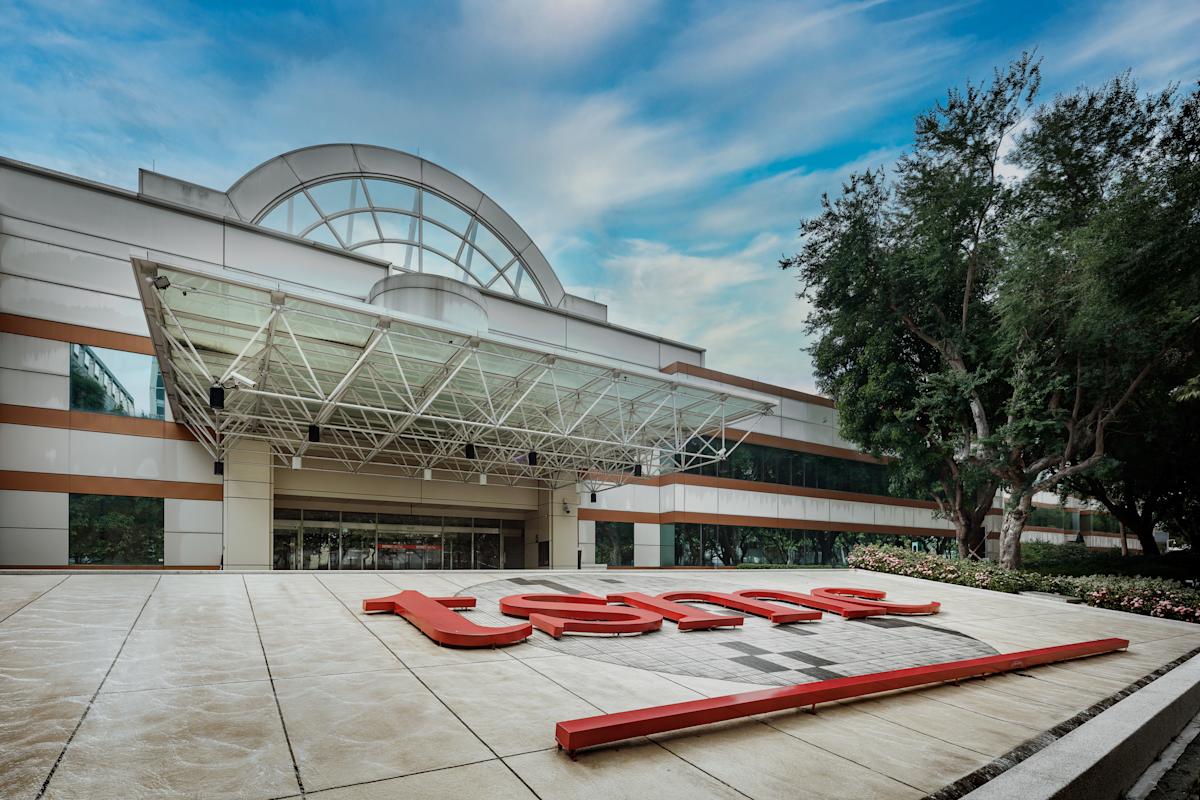
Besides, in fact, OpenAI could supply chips from a wide range of its companions, however no matter what’s stamped on the silicon, all of them come from the identical place. “I would be very stunned if it wasn’t TSMC,” Burr mentioned, “I am fairly positive all of the AI chips on the market use TSMC.” TSMC stands for Taiwan Semiconductor Manufacturing Firm which, over the previous decade, has overwhelmed its fundamental rivals to grow to be the biggest (and in lots of circumstances solely) supply of superior chips for the complete know-how trade. In contrast to historic rivals, who designed and manufactured their very own {hardware}, TSMC is a pure foundry, constructing solely chips designed by others.
Inside one in every of TSMC’s factories
(Taiwan Semiconductor Manufacturing Co. Ltd.)
Gil Luria is the Managing Director in command of know-how analysis on the funding agency DA Davidson. He mentioned that TSMC just isn’t solely a hindrance to the Western know-how trade, however is definitely the “single largest level of failure for the complete international economic system.” Luria credit the corporate with a formidable growth “contemplating that it has needed to improve GPU manufacturing tenfold over the previous three years.” But it surely mentioned that, “in a catastrophic situation the place TSMC is unable to fabricate in Taiwan, the disruption can be vital.” And it will not simply have an effect on the world of AI, however “cell phone gross sales in addition to international automobile gross sales.”
TSMC changed Intel for various well-documented causes, however a very powerful right here is the embrace of Excessive Ultraviolet (EUV) Lithography. It is a know-how that Intel had initially supported however struggled to completely undertake, permitting TSMC to take it and go straight to the highest. EUV makes the headline chips utilized by virtually everybody on the planet of client electronics. Apple, Qualcomm, NVIDIA, AMD (together with the SOCs contained in the PS5 and Xbox) all use TSMC chips. Even Intel has used TSMC foundries for some client CPUs because it tries to bridge the manufacturing hole between the 2 corporations.
“TSMC is the present chief in superior 3 nanometer (nm) course of applied sciences,” mentioned College of Pennsylvania Professor Benjamin C. Lee. The corporate’s solely significant rivals are Intel and Samsung, neither of which pose a risk to its dominance at current. “Intel has been working for a really very long time to construct a foundry enterprise,” he defined, “nevertheless it nonetheless hasn’t perfected its interface.” Samsung is in the same state of affairs, however Professor Lee defined that it “has not been capable of entice sufficient clients to generate a worthwhile manufacturing enterprise”.
Professor Lee mentioned that TSMC, by comparability, has grow to be so profitable due to how good its chips are and the way straightforward it’s for patrons to construct chips with its instruments. “TSMC produces high-yield chips, which suggests extra of its chips come out of the fabrication course of with the anticipated efficiency and reliability.” Consequently, it ought to come as no shock that TSMC is a money-making machine. Within the second quarter of 2025 alone, it reported a internet revenue of USD 12.8 billion. And within the following three months, TSMC posted internet earnings of $14.76 billion.
“TSMC’s secret sauce is yield mastery,” defined ARPU Intelligence, an analyst group that prefers to make use of the group title over particular person attribution. “This experience is the results of many years of amassed course of refinement (and) deep institutional information that can’t be replicated.” This deep institutional information and talent to ship high-quality product creates a “highly effective technical lock-in, as corporations like Apple and NVIDIA design their chips particularly for TSMC’s distinctive manufacturing course of… It isn’t so simple as sending the (chip) design to a different manufacturing facility,” he added.
The draw back, at the very least for the broader tech trade, is that TSMC is now a bottleneck that the complete trade has come to depend on. Within the firm’s most up-to-date financials, it mentioned greater than three-quarters of its enterprise comes from North American clients. And in a name with traders, Chairman and CEO CC Wei talked concerning the efforts the corporate has made to slim the hole between its robust demand and restricted provide. Whereas he was reticent to be particular, he mentioned the corporate’s capability is “very tight” and is more likely to stay so for the foreseeable future.
Actually, TSMC’s capability is so tight that it is already given at the very least one huge title a headache. In the beginning of this 12 months, Reuters reported that NVIDIA canceled an order of its H20 AI chips after being knowledgeable that the US wouldn’t enable them to be exported to China. Nonetheless, as soon as the ban was lifted, NVIDIA was unable to search out house on TSMC’s schedule, with the subsequent slot out there at the very least 9 months later.
“TSMC has no room for error,” mentioned ARPU Intelligence, “any small disruption may halt manufacturing with no spare capability to soak up the shock.” He talked about the Hualien earthquake that hit Taiwan on April 3, 2024 and the way it negatively affected the variety of wafers in manufacturing.
Naturally, TSMC is spending closely to extend its manufacturing capability for its clients, each in Taiwan and the US. Close to its residence, development of its A14 fabs is predicted to start within the very close to future, with the primary chips to be produced in 2028. This facility will make the most of TSMC’s A14 course of node, producing 1.4nm chips, which supply a velocity increase over the 2nm silicon anticipated to reach in client units subsequent 12 months.

Picture of TSMC’s campus in Arizona
(Taiwan Semiconductor Manufacturing Co. Ltd.)
In the meantime, work continues apace on development of TSMC’s sprawling facility in Arizona, which opened in April 2021. Whereas Reuters reported on the time, the primary facility started working in early 2025, producing 4nm chips. Final week, NVIDIA and TSMC confirmed off the primary Blackwell wafer manufactured on the Arizona plant forward of home quantity manufacturing.
Plans for the operation have grown over time, increasing from three amenities to 6 to be constructed over the subsequent decade. And whereas the preliminary define known as for the US amenities to be a number of course of generations behind Taiwan, that can also be altering. In his newest investor name, Chairman and CEO CC Wei pledged to speculate extra within the US facility to deliver it only one technology behind the Taiwanese facility.
No quantity of funding from TSMC or rivals from rivals like Samsung and Intel will shortly resolve the present bottleneck. It’s going to take a few years, if not many years, for the world to cut back its dependence on Taiwan for the latter’s manufacturing. TSMC’s island stays the weak level of the trade, and if one thing goes incorrect, the implications could be really dire.
(tagsTranslate)TSMC