Why Apple Removed the Fingerprint Sensor from iPhones (and Why It’s Not Coming Back)
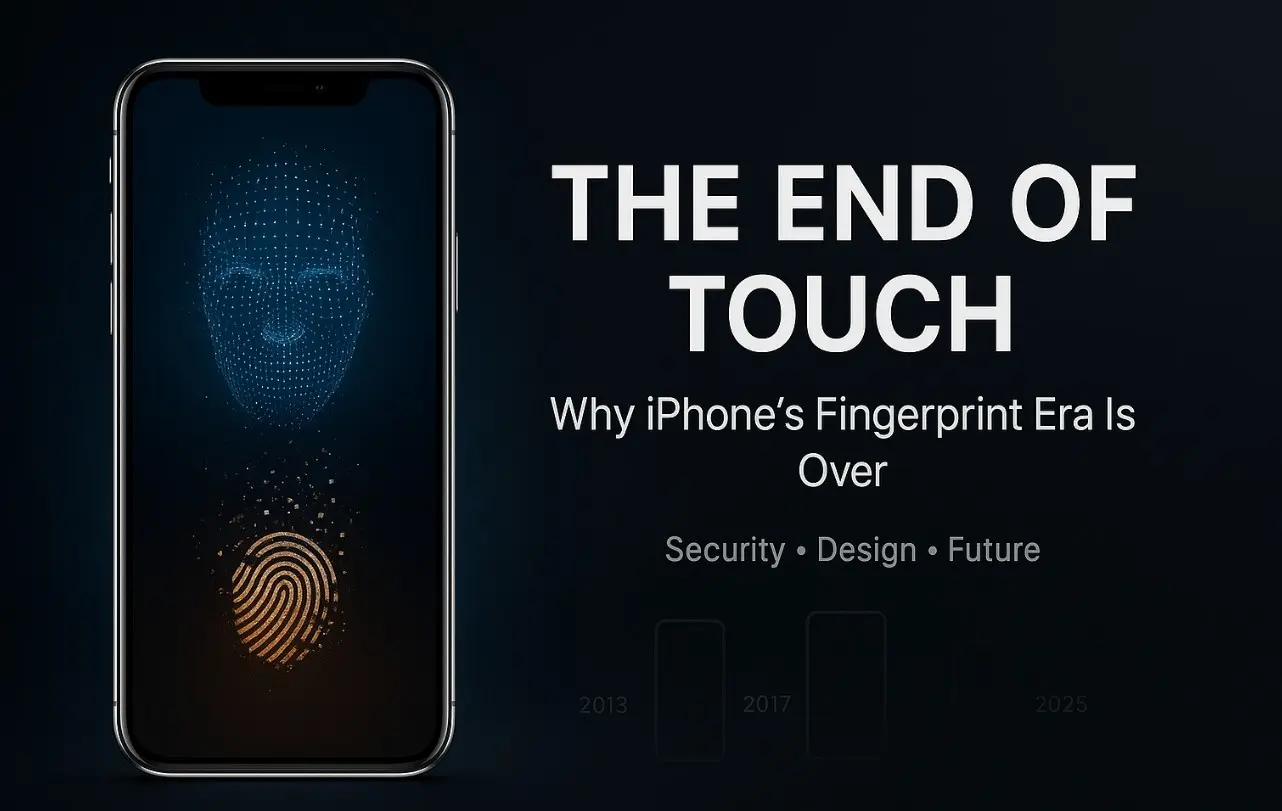
One query that many Apple followers ceaselessly ask after they see Android customers is, ‘Why did the fingerprint sensor disappear from iPhones, particularly those that upgraded from older fashions and located themselves lacking the acquainted Contact ID?’ The reply lies in Apple’s calculated resolution to prioritize Face ID for each safety and design causes—a transfer that has basically reshaped how we work together with our units.
Whereas some customers nonetheless lengthy for the times of merely urgent their thumb to unlock their telephone, Apple’s dedication to facial recognition know-how runs deeper than many understand. This isn’t nearly following tendencies or forcing change for the sake of change. It’s about Apple’s imaginative and prescient for the way forward for private know-how, the place our units acknowledge us as naturally as a good friend would.
Because the iPhone 17 launch is across the nook, and this time there isn’t any probability of getting the FingerPrint sensor on iPhones to unlock them, so let’s focus on why that is occurring.
Why Apple Eliminated Contact ID: Fast Reply
Apple eliminated the fingerprint sensor from iPhones in 2017 to realize an edge-to-edge show design and implement Face ID, which is 20x safer (1 in 1,000,000 vs 1 in 50,000 false constructive fee). The removing enabled the all-screen iPhone X design whereas offering superior safety and comfort. Contact ID gained’t return to flagship iPhones as Apple continues investing in Face ID enhancements and views it as the way forward for biometric authentication.
The Historical past of Contact ID on iPhones
Contact ID made its groundbreaking debut in 2013 with the iPhone 5s, reworking smartphone safety from a chore into one thing easy. Earlier than Contact ID, most iPhone customers both struggled with four-digit passcodes or, extra generally, left their units utterly unprotected. Apple’s fingerprint sensor revolutionized safety by making it handy.

The know-how has advanced quickly. By 2015, the iPhone 6s featured second-generation Contact ID that was twice as quick as the unique. Customers turned so accustomed to the moment unlock that they’d typically miss their lock display screen notifications totally—a testomony to how seamlessly the know-how labored.

The iPhone 8 and iPhone 8 Plus, launched in September 2017, marked the tip of an period. These can be the final flagship iPhones to characteristic Contact ID. Launched alongside the revolutionary iPhone X, which featured its Face ID system, they represented Apple hedging its bets, providing prospects a selection between the acquainted and the long run.

At the moment, Contact ID hasn’t utterly vanished from Apple’s lineup. Funds units just like the iPhone SE (at the moment in its third era) nonetheless incorporate the know-how by the basic residence button design. Equally, a number of iPad fashions have cleverly built-in Contact ID into their energy buttons, proving Apple hasn’t deserted the know-how totally—simply repositioned it for particular use circumstances.
This selective deployment tells us one thing essential: Apple views Contact ID as a legacy know-how appropriate for funds units and particular type elements, slightly than as the way forward for biometric authentication for its flagship merchandise.
Why Apple Eliminated the Fingerprint Sensor
The choice to remove Contact ID from flagship iPhones wasn’t made frivolously. Apple had invested years and billions of {dollars} into perfecting fingerprint recognition. So why abandon it on the top of its success?
Safety Improve: The numbers inform a compelling story. Face ID is roughly 20 instances safer than Contact ID. The place Contact ID provided a 1 in 50,000 probability of a random individual’s fingerprint unlocking your telephone, Face ID pushed that to 1 in 1,000,000. This isn’t simply an incremental enchancment—it’s a elementary leap in biometric safety. Face ID creates an in depth 3D map of your face utilizing 30,000 invisible infrared dots, making it practically not possible to idiot with pictures, masks, and even subtle replicas.
Design Selection: Apple’s obsession with reaching an correct edge-to-edge show meant one thing needed to give. The residence button, crucial for conventional Contact ID implementation, consumed precious display screen house. By eradicating it, Apple may lengthen the show nearly to the machine’s edges, creating the immersive expertise we now take with no consideration. Whereas some Android producers experimented with under-display fingerprint sensors, Apple discovered these options too sluggish and unreliable for its requirements.
Sturdiness Points: Contact ID, regardless of its magnificence, had inherent limitations. Moist fingers, worn fingerprints from handbook labor, cuts, burns, and even one thing so simple as lotion may intrude with recognition. Display protectors can typically trigger issues, and the sensor itself might degrade over time because of fixed use. Customers with sure pores and skin circumstances or these whose work concerned chemical substances typically discovered Contact ID frustratingly unreliable.
Consumer Expertise: Apple wished to create a futuristic, nearly magical unlock methodology that felt much less like authentication and extra just like the telephone merely understanding who you’re. With Face ID, you don’t actively unlock your telephone—you choose it up and swipe. The authentication course of happens so naturally that many customers overlook it’s even occurring. This aligns with Apple’s broader philosophy of creating know-how disappear into the background of our lives.
Why Apple Prefers Face ID Over Contact ID

Face ID’s superiority extends far past easy telephone unlocking. The know-how works seamlessly throughout numerous situations the place Contact ID would fail or really feel cumbersome. Once you look at a notification, Face ID authenticates you to disclose its full content material. When filling passwords in Safari, a fast look confirms your id. Apple Pay transactions occur with only a double-click and a glance—no repositioning your thumb required.
The system’s adaptability showcases spectacular AI enhancements in iOS. Face ID learns your face over time, adjusting to gradual adjustments like rising a beard, sporting totally different glasses, or styling your hair in another way. In the course of the COVID-19 pandemic, Apple launched updates that enabled Face ID to work with masks—first when paired with an Apple Watch, after which standalone. This type of software-based enchancment can be not possible with Contact ID’s hardware-dependent nature.
The ecosystem tie-in can’t be overstated. Face ID integrates seamlessly with Apple Pay, the App Retailer, iCloud Keychain, and third-party apps by a unified API. Builders don’t want to fret about which authentication methodology customers have—the system handles it transparently. This consistency throughout the ecosystem simplifies growth and ensures a uniform expertise whether or not you’re banking, buying, or accessing delicate paperwork.
Face ID additionally permits options that Contact ID couldn’t present. Consideration consciousness retains your display screen lit when you’re studying. The system can inform should you’re taking a look at your telephone earlier than decreasing the ringer quantity. These delicate quality-of-life enhancements show how facial recognition unlocks performance that fingerprint scanning may by no means obtain.
Will Apple Ever Deliver Again Contact ID?

Rumors about Contact ID’s return floor commonly, notably across the launch of recent iPhones. Reviews have urged Apple examined under-display fingerprint sensors as lately as 2021, exploring whether or not each biometric programs may coexist in a single machine. Patents have been filed, prototypes have allegedly been developed, and whispers from the provision chain counsel ongoing analysis.
The actuality, nonetheless, factors in a totally different route. Trade analysts persistently report that Face ID stays Apple’s long-term wager for flagship units. The corporate continues investing closely in bettering Face ID slightly than dividing assets between two authentication programs. Current developments deal with enhancing Face ID’s performance from wider angles and doubtlessly integrating the know-how totally underneath the show, thereby eliminating the necessity for a visual Dynamic Island.
Even the current iPhone SE line’s successor, the iPhone 16e, doesn’t have a bodily entrance button or Contact ID, which means that Apple is slowly shifting its focus totally to Face ID.
Apple’s patent filings and analysis into under-display Contact ID possible signify contingency planning slightly than speedy product plans. Know-how corporations commonly discover alternate options and fallback choices with out aspiring to implement them. The truth that these applied sciences haven’t appeared in merchandise regardless of years of rumors suggests Apple stays assured in its Face ID-first technique.
Consumer Opinions: Why Folks Nonetheless Need Contact ID
Regardless of Face ID’s technical superiority, a vocal section of customers continues to advocate for the return of Contact ID. Understanding their views reveals reliable use circumstances the place fingerprint authentication is especially efficient.
Comfort in sure circumstances drives a lot of the demand. Employees who put on masks commonly—equivalent to healthcare professionals, development staff, or these in dusty environments—typically discover Face ID irritating.
Equally, individuals sporting gloves in chilly climates can nonetheless use Contact ID (capacitive gloves exist), whereas Face ID would possibly battle with heavy winter gear obscuring facial options. Bike riders with helmets, individuals mendacity in mattress with half their face in a pillow, or customers with particular disabilities that have an effect on facial recognition all signify situations the place Contact ID would carry out higher.
Familiarity with older fashions creates an emotional attachment that extends past sensible concerns. Customers who spent years with Contact ID developed muscle reminiscence and workflows round it. The bodily sensation of the house button clicking supplied tactile suggestions that some customers miss. This isn’t simply nostalgia—it’s about disrupting established patterns that labored properly for thousands and thousands of individuals.
Demand for dual-biometrics displays a need for selection and redundancy. Many customers ask why they will’t have each Face ID and Contact ID, utilizing whichever is extra handy within the second. Some Android telephones provide this flexibility, resulting in questions on why Apple, with its huge assets, can’t present each choices. The reply lies not in technical impossibility however in Apple’s design philosophy of creating decisive decisions slightly than providing each doable choice.
Privateness considerations, whereas typically based mostly on misconceptions, affect some customers’ preferences. Regardless of Face ID processing totally on-device with no facial knowledge despatched to Apple, some individuals really feel extra comfy with fingerprint authentication. The concept of a digital camera consistently able to scan their face feels extra invasive than intentionally inserting a finger on a sensor, even when the precise privateness implications are similar.
Conclusion
Contact ID isn’t returning to flagship iPhones in any respect as a result of Apple sees Face ID as basically safer and futuristic. This isn’t a short lived technique or an experiment that may be reversed—it’s a dedicated imaginative and prescient for the way we’ll work together with our units going ahead.
The long run Apple envisions extends past the present Face ID implementation. Underneath-display Face ID know-how may remove the Dynamic Island, creating true full-screen units. AI-powered biometrics might incorporate gait recognition, voice patterns, or different organic markers to reinforce invisible multi-factor authentication. Apple’s Imaginative and prescient Professional already demonstrates spatial consciousness and eye monitoring that would finally complement or improve Face ID.
The removing of the fingerprint sensor from iPhones represents greater than a technical resolution—it’s an announcement about progress. Simply as bodily keyboards gave method to touchscreens regardless of person resistance, Contact ID has grow to be a stepping stone to extra superior authentication strategies.
FAQs
No, the iPhone 17 lineup is not going to embrace a fingerprint sensor. Apple stays dedicated to Face ID for all flagship fashions, with ongoing enhancements to the facial recognition system slightly than a return to Contact ID.
Presently, solely the iPhone SE (third era) options Contact ID by its residence button. All different iPhone fashions in Apple’s present lineup use Face ID completely. Some iPad fashions additionally incorporate Contact ID of their energy buttons.
No, Face ID is statistically safer than Contact ID. Face ID has a 1 in 1,000,000 probability of being unlocked by a random individual, whereas Contact ID has a 1 in 50,000 probability of being unlocked by a random individual. Face ID’s 3D mapping know-how can also be tougher to spoof than fingerprint scanning.
Apple discontinued fingerprint unlock on flagship iPhones to realize an edge-to-edge show design and implement safer Face ID know-how. The choice aligned with Apple’s imaginative and prescient for extra pure, seamless machine interplay whereas bettering safety.